
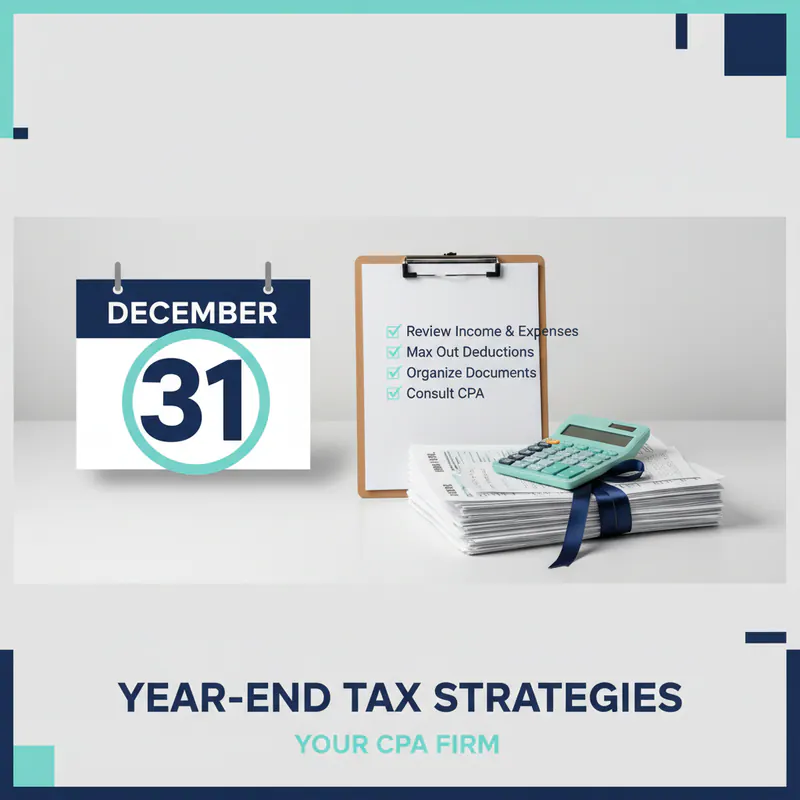
Don't wait until January to think about taxes. The moves you make before December 31st can significantly reduce your tax bill.
This checklist covers the key strategies to consider before the year ends.
Major 2025 Tax Law Changes
The One Big Beautiful Bill Act (OBBBA) made significant changes that affect year-end planning:
Section 179 Expansion: The deduction limit permanently increased to $2.5 million with a phase-out threshold of $4 million. Future years will be indexed for inflation.
100% Bonus Depreciation Restored: Property acquired and placed in service after January 19, 2025, qualifies for full first-year expensing. This is now permanent.
R&E Immediate Deduction: Domestic research and experimentation expenditures can now be immediately deducted instead of capitalized over 60 months.
SALT Deduction Increase: The state and local tax deduction cap increased from $10,000 to $40,000 and will continue rising 1% annually through 2029.
Income Timing Strategies
If You Expect Similar Tax Rates Next Year
Consider deferring income and accelerating deductions:
- Delay invoicing until January
- Prepay deductible expenses (up to 12 months)
- Make fourth quarter estimated tax payments before December 31
If Tax Rates Will Change
The opposite strategy may apply. If you expect higher rates next year:
- Accelerate income into the current year
- Defer deductions to next year when they'll save more
Equipment and Asset Purchases
With 100% bonus depreciation restored, equipment purchases made and placed in service by December 31 can be fully deducted this year.
Consider accelerating planned purchases if:
- You have sufficient taxable income to absorb the deduction
- The equipment will be used in your business
- You were planning to buy it anyway
Don't buy equipment you don't need just for the tax deduction. The deduction saves you 20-37 cents per dollar spent, meaning you still spend 63-80 cents net.
Retirement Plan Contributions
Establish New Plans
To claim a deduction for 2025, most retirement plans must be established by December 31:
- 401(k) plans
- SIMPLE IRAs
- Defined benefit plans
SEP IRAs are an exception. They can be established and funded up to your extended filing deadline.
Maximize Contributions
Review contribution limits and ensure you're maximizing tax-advantaged retirement savings:
- 401(k) employee deferrals: $23,500 (plus $7,500 catch-up if 50+)
- SEP IRA: Up to 25% of compensation, max $70,000
- SIMPLE IRA: $16,500 (plus $3,500 catch-up if 50+)
Employee Bonuses
If you're on the accrual method, bonuses declared by December 31 and paid within 2.5 months of year-end are deductible in the current year.
Cash-basis taxpayers must actually pay bonuses by December 31 to claim the deduction.
Bad Debt Write-offs
Review your accounts receivable for uncollectible amounts. Write off bad debts before year-end to claim the deduction.
Document your collection efforts to support the write-off if questioned.
Pass-Through Entity Tax Elections
If your state offers a pass-through entity tax (PTET) election, review whether it makes sense for your situation. Most states require elections before year-end.
PTET allows the business to pay state tax at the entity level, creating a federal deduction that bypasses the SALT cap. Ohio offers this election for qualifying businesses.
The Key to Effective Planning
Year-end tax planning works best when you have current-year financials and reasonable estimates of next year's income. Work with your CPA in November or early December while there's still time to act.